
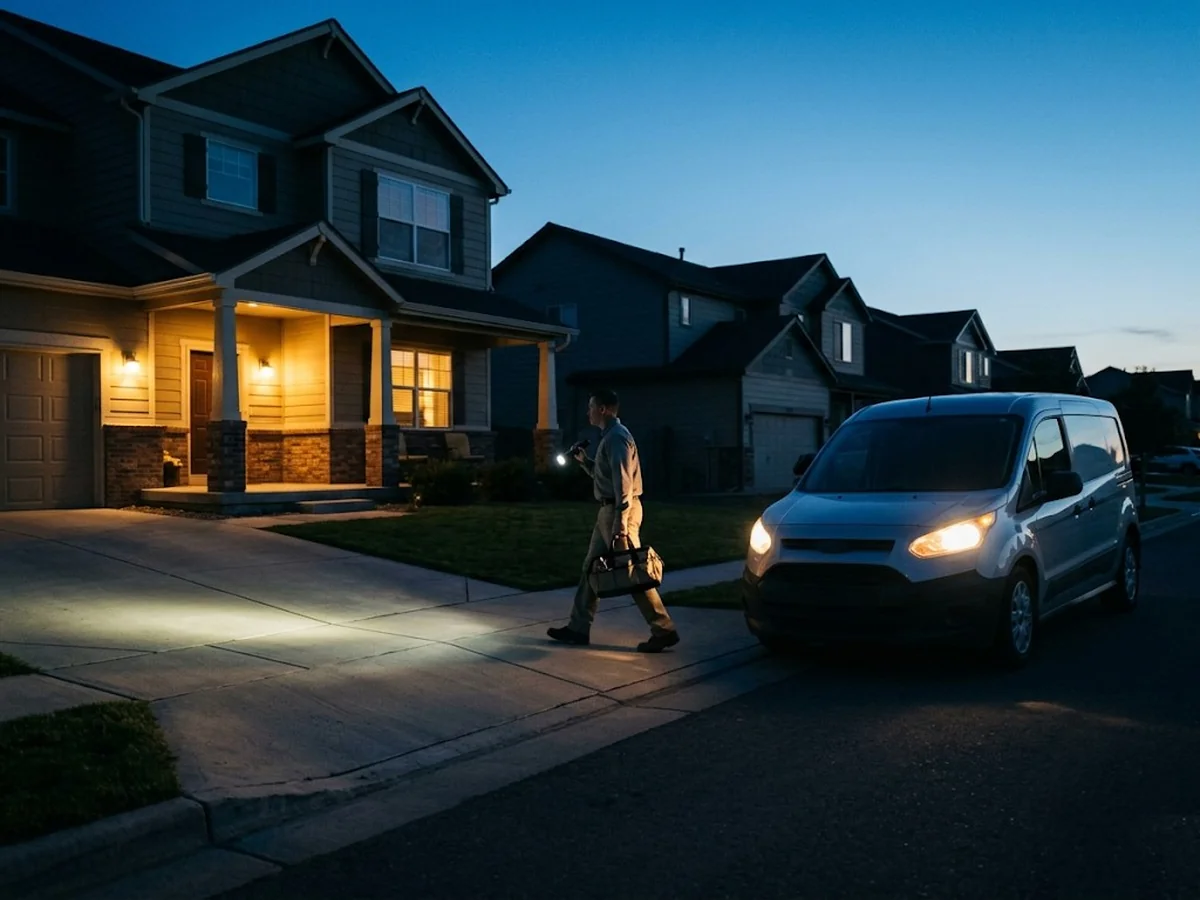
24 Hour AC Repair and Emergency HVAC: Dispatch in Under an Hour
An HVAC failure at 2 a.m. in August or at 6 p.m. on a below-zero night is not a normal service call. Our emergency dispatch network covers every major U.S. metro 24/7/365, with contractors who stock their trucks for after-hours calls and keep a rotating on-call schedule. You call, we match, and a licensed tech is typically in your driveway within 90 minutes, upfront price in writing before work starts.
- Emergency dispatch surcharges in 2026 typically add $85 to $225 on top of the standard service call.
- True emergencies include infants, elderly residents, medical needs, and extreme weather.
- Most no-cool emergencies trace to a single failed part: capacitor, contactor, or fan motor.
- No-heat emergencies in deep cold risk frozen pipes within 6-12 hours; prioritize dispatch.
- Our after-hours network is verified for tool-truck stocking and holiday/weekend response.
01When Your HVAC Fails at 2 A.M.: How Emergency Dispatch Works
Every HVAC company advertises "24/7 service." Fewer actually answer the phone after 9 p.m. Our network is built on a different premise: we verify that every after-hours dispatch reaches a live person within 90 seconds, that the tech assigned to your call has the right parts stocked for common failures, and that the truck is physically in or near your service area at the time you call. That last point matters more than people realize. An emergency quote from a "24/7" company whose nearest truck is 50 miles away is not an emergency response.
Our emergency routing algorithm differs from our daytime routing. In daytime dispatch, we optimize for cost, customer rating, and contractor availability across a full workday. In emergency dispatch, we optimize for time-to-technician and first-visit completion rate. We know from our post-service data that the top predictor of a successful emergency repair is whether the contractor's truck is within 15 minutes of the home and has the commonly failed part (capacitor, contactor, flame sensor, ignitor, or blower motor) in stock. That is what our emergency network filters for.
02When to Call a Pro (And How to Triage Your Emergency)
03What Emergency HVAC Actually Costs in 2026
Honest pricing on emergency work starts with distinguishing two separate charges: the emergency dispatch surcharge and the actual repair cost. The surcharge covers the tech's overtime rate, the truck's after-hours availability, and the opportunity cost of being on call. The repair itself is usually priced at the same flat rate as a daytime repair, because the parts cost and installation time are the same.
In 2026, our network pricing falls within these ranges:
The repair itself matches daytime pricing for parts and installation labor. A capacitor replacement that runs $200 at 2 p.m. runs the same $200 in labor and parts at 2 a.m.; the added cost is the dispatch surcharge, not the work. Beware of any emergency quote that doubles the parts cost or triples the labor for the same repair.
04Step-by-Step: What an Emergency HVAC Call Looks Like
05Red Flags: How to Spot a Bad Emergency HVAC Contractor
06How Our Matching Works for Emergency HVAC
Emergency matching is optimized for time-to-arrival, parts-on-truck probability, and live-person response. Our routing system maintains a real-time map of on-call contractors by ZIP, flags trucks currently responding to other emergencies, and scores contractors on their last 90 days of emergency-call performance (first-visit completion rate, on-time arrival rate, and customer-reported satisfaction). When you submit, we match the highest-scoring contractor who can meet your window; if they cannot, we automatically escalate without you needing to call back.
During weather events (heat waves above 100F, polar vortex events below 10F, hurricanes, or tornado aftermath), we activate surge protocols that expand the matching radius and pre-position additional on-call trucks in affected metros. The National Weather Service maintains a heat-safety resource and a cold-safety resource that our dispatch references for triage severity during extreme events.
07Questions to Ask Before Accepting an Emergency HVAC Dispatch
- What is your estimated arrival time, and will you update me if it changes?
- What is the emergency dispatch surcharge, and is it credited toward approved repairs?
- What parts do you have on the truck for a system like mine? (Name the brand and rough age.)
- If you cannot complete the repair tonight, what stabilization options do you offer until parts arrive?
- Will you provide a written flat-rate quote before starting work?
- Are you the actual on-call technician, or am I being dispatched through a call center?
- What is your license number and general liability insurance carrier?
- Is my system under any manufacturer warranty you will verify before quoting?
08Authoritative Resources
- National Weather Service Heat Safety — guidance on heat-related health risks and when indoor cooling becomes critical
- CDC Extreme Heat Resources — public health guidance for vulnerable populations
- EPA Carbon Monoxide Safety — CO emergency protocols and heating equipment safety
An HVAC emergency is stressful, but it does not have to be a financial ambush. Our network exists to match you with a fast, honest, licensed response at any hour. The right contractor arrives quickly, diagnoses correctly, quotes in writing, and gets your home comfortable again. Request a dispatch and we will have someone on the way.
What 24/7 emergency hvac actually costs.
12-month aggregate from our contractor network, national average. Your actual quote depends on equipment, access, and scope.
| Service item | Typical range | What's included |
|---|---|---|
| After-hours service call (evenings/weekends) | $145 - $295 | Base dispatch plus overtime surcharge |
| Holiday emergency dispatch | $195 - $395 | Major holidays and Sundays |
| Overnight (10 p.m. - 6 a.m.) emergency | $225 - $475 | Double-time labor on most networks |
| Emergency capacitor replacement | $245 - $550 | Most common emergency repair |
| Emergency refrigerant recharge + leak search | $525 - $2,200 | Leak must be found; no top-offs |
| Emergency gas furnace no-heat diagnostic | $175 - $350 | Heat season overtime rates |
| Emergency heat pump defrost repair | $425 - $950 | Required during winter storms |
| Emergency condensate overflow fix | $195 - $475 | Prevents ceiling and drywall damage |
| Emergency electrical disconnect / breaker | $225 - $550 | Burnt disconnects; fire risk |
| Temporary portable AC rental coordination | $75 - $200/day | If parts require next-day delivery |
| Same-day parts runner / courier | $85 - $175 | When truck stock is exhausted |
| Commercial rooftop unit emergency | $450 - $1,250 | Rigging and crane access premium |
24/7 Emergency HVAC pricing varies by state.
Top 10 U.S. states by population — pricing variance vs. national average for 24/7 emergency hvac.
| State | Pricing vs. national | Why |
|---|---|---|
| California | +19% | Pacific HVAC pricing runs 15-20% above national average due to high labor costs, Title 24 (CA) energy compliance overhead, and seismic strap |
| Texas | +10% | South Central pricing runs at or slightly above national average for cooling work due to high tonnage requirements; heating is below average |
| Florida | Baseline | Southeast HVAC pricing runs 5-10% below national average for cooling work due to high contractor density and equipment sales volume; heating |
| New York | +14% | Northeast HVAC pricing typically runs 10-15% above national average due to higher labor costs, dense urban access challenges, and oil-to-gas |
| Pennsylvania | +14% | Northeast HVAC pricing typically runs 10-15% above national average due to higher labor costs, dense urban access challenges, and oil-to-gas |
| Illinois | +5% | Midwest pricing tracks close to national average; heating-related work runs slightly higher due to extended winter season and higher heat-pu |
| Ohio | +5% | Midwest pricing tracks close to national average; heating-related work runs slightly higher due to extended winter season and higher heat-pu |
| Georgia | Baseline | Southeast HVAC pricing runs 5-10% below national average for cooling work due to high contractor density and equipment sales volume; heating |
| North Carolina | Baseline | Southeast HVAC pricing runs 5-10% below national average for cooling work due to high contractor density and equipment sales volume; heating |
| Michigan | +5% | Midwest pricing tracks close to national average; heating-related work runs slightly higher due to extended winter season and higher heat-pu |
24/7 Emergency HVAC issues our network sees most.
No cooling, house above 85F with infant or senior resident
Diagnosis: Most commonly failed capacitor, burnt contactor, tripped breaker, or failed blower motor. Priority dispatch.
Typical fix: Arrive within 90 minutes, diagnose in 30 minutes, repair with truck-stocked parts when possible. — $245 - $950
No heat, single-digit outdoor temps, pipes at freeze risk
Diagnosis: Gas valve, ignitor, flame sensor, or pressure switch failure; heat pump defrost issue; electrical interlock.
Typical fix: Restore heat by any safe means; stage portable heaters if primary repair requires parts order. — $225 - $1,200
Water actively leaking from air handler into finished space
Diagnosis: Clogged condensate drain, failed pump, rusted drain pan, or frozen coil thawing rapidly.
Typical fix: Clear drain immediately, install or verify float switch, address root cause (filter, coil, airflow). — $195 - $650
Burning smell from HVAC system
Diagnosis: Burnt motor, electrical arcing in disconnect, wiring short, or failed control transformer. Fire risk.
Typical fix: Kill power at disconnect and breaker before arrival, inspect with IR camera if available, replace affected components. — $225 - $1,400
CO detector alarming; suspected furnace issue
Diagnosis: Cracked heat exchanger, blocked flue, back-drafting water heater, or combustion imbalance. Life-safety.
Typical fix: Evacuate home, call 911/gas utility first, tech performs combustion analysis and red-tags if needed. — $175 - $3,500
System running but tripping breaker every few minutes
Diagnosis: Seized compressor, shorted motor winding, damaged wiring, or overloaded circuit.
Typical fix: Megger test motors, inspect wiring, verify circuit sizing; compressor replacement often required. — $350 - $3,800
24/7 Emergency HVAC: step-by-step.
From the moment you call 1-877-877-6723 to the moment work is complete.
Emergency dispatch call
Call {phone}. Live dispatcher answers within 15 seconds — no phone tree. Captures ZIP, symptom, urgency level (medical/elderly/infant priority).
Matched contractor confirmation
Dispatcher routes to nearest available emergency contractor. Contractor calls back within 5-10 min to confirm en-route status + arrival ETA.
On-site emergency arrival
Tech arrives in marked truck with full emergency parts inventory (capacitors, contactors, ignitors, refrigerant). Median arrival: 90 min in metro, 2-3 hrs in rural.
Diagnosis + emergency quote
Tech diagnoses on-site, presents flat-rate quote BEFORE work. Emergency premium pricing typically 20-40% above standard rates due to after-hours dispatch.
Repair or temporary fix
Most common emergency parts (capacitors, ignitors, flame sensors, contactors) on truck — fix completed during visit. For parts not on truck (compressor, blower motor), tech provides temporary solution + schedules next-day return.
System verification + safety check
Tech verifies safe operation, checks for any related issues, ensures CO levels safe (gas equipment), confirms thermostat works through full cycle.
24/7 Emergency HVAC: what's safe to DIY vs hire out.
Some tasks are simple homeowner jobs. Others legally require a licensed contractor.
| Task | Verdict | Why |
|---|---|---|
| Reset tripped breaker once | DIY OK | If breaker tripped once and resets cleanly, system may run normally. Repeated tripping = call pro immediately. |
| Clear obvious airflow blockage (closed vent, dirty filter) | DIY OK | Quick check before calling — easy fixes that cost $0. |
| Reset float switch on AC condensate pan | DIY OK | If condensate backed up + tripped float switch, clearing the blockage and resetting may restore operation. |
| Use space heaters/portable AC as bridge solution | DIY OK | While waiting for emergency tech, portable solutions can prevent pipe freeze (heaters) or provide cooling for medical needs (window AC). Use safely with code-compliant cords/outlets. |
| Diagnose 'no cool' or 'no heat' issue | Hire pro | Emergency dispatch needs accurate symptom for routing. Don't try to diagnose — describe the symptom to the dispatcher. |
| Repair gas line leak | Hire pro | Gas utility must shut off supply first; gas line repair requires gas-fitter license. |
| Replace any internal furnace component | Hire pro | Wrong part swap can mask a serious issue (cracked heat exchanger, CO leak). |
What your 24/7 emergency hvac technician will bring.
Standard equipment a licensed 24/7 emergency hvac contractor carries:
- Full inventory of emergency parts (capacitors, contactors, ignitors, flame sensors, transformers, fan motors)
- Manifold gauge set with R-410A and R-22 hoses
- Combustion analyzer + CO meter
- Multimeter + clamp ammeter
- Refrigerant tank for emergency top-off (after leak repair)
- Portable propane heater for diagnosis in cold + no-heat conditions
- Boroscope camera for heat exchanger inspection
- Backup batteries for thermostat replacement
Every major brand for 24/7 emergency hvac.
| Manufacturer | What our network technicians note |
|---|---|
| Carrier / Bryant | Most common residential brand; truck stock parts include Infinity comm boards, Greenspeed inverter fuses, and OEM capacitors. Proprietary parts may require next-day shipment. |
| Trane / American Standard | XV variable-speed units use proprietary Climatuff compressor parts; dealer-only for exact match. Most emergency repairs use generic equivalent electrical components. |
| Lennox | Signature Series parts almost always require next-day dealer order; our emergency network flags this at dispatch so homeowners know what to expect on after-hours Lennox calls. |
| Rheem / Ruud | EcoNet system parts are widely stocked; emergency response times typically shortest among premium brands due to parts availability. |
| Goodman / Amana / Daikin | Excellent truck-stock parts availability; most emergency repairs completed on first visit. Universal-fit compatibility with many aftermarket components. |
| York / Coleman / Luxaire | Johnson Controls brands share many components; emergency parts usually stocked but some Affinity series control boards require dealer order. |
| Mitsubishi Electric mini-splits | Proprietary parts; emergency same-day repair limited to electrical and filter issues. Board or compressor failures typically require 1-3 day parts wait. |
| Trane / Lennox commercial rooftop | Commercial emergency dispatch includes rigging coordination; response times extended in rural markets due to specialty parts and crane availability. |
24/7 Emergency HVAC red flags to watch for.
Common scam patterns in 24/7 emergency hvac that should make you walk away.
Demands cash up-front before diagnosis
Reputable emergency contractors take credit card on completion. Cash up-front is a fraud indicator — they may diagnose phantom problems then leave with your money.
Shows up without uniform, marked truck, or visible license
Emergency tech should look professional — uniform, badge, marked truck with license number. Otherwise may be unlicensed operator targeting emergency calls.
Quote 5-10x normal rate without emergency dispatch reason
Emergency premium is typically 20-40% above standard rate. 5-10x markup is gouging — get quote in writing before authorizing.
Pushes immediate full system replacement during emergency
Capacitor replacement should restore cooling in most no-cool calls. Pushing $8K replacement during emergency = sales tactic, not service.
Refuses to provide written invoice
Emergency or not, you need a paper trail for warranty + insurance + dispute resolution. Refusing invoice = recovery problem if anything goes wrong.
Pressures you to authorize work without showing the failed part
A capacitor swap = 5-min visual confirmation of bulged/leaking cap. Pro should show you the failed component before charging.
HVAC cost calculator — estimate in 30 seconds.
Tell us a bit about your home and we'll estimate your install range based on 12 months of network quote data. Not a binding quote — matched contractors confirm after an in-home assessment.
Estimate range based on 12-month aggregate network quote data. Matched contractor confirms after in-home Manual-J load calc.
8 questions about 24/7 emergency hvac.
What counts as an HVAC emergency?+
True emergencies include: no cooling with infants, seniors, or medical conditions in the home; no heating in sub-freezing weather; active water damage from condensate or frozen coils; burning smells or CO detector alarms; and electrical issues with fire risk. If in doubt, call; our dispatch screens for priority.
How much does emergency HVAC service cost?+
Emergency dispatch typically adds $85 to $225 to the standard service call. Overnight and holiday rates can add $195 to $475. Parts and labor for the actual repair price the same as daytime rates; only the dispatch surcharge and overtime labor are elevated. We quote both in writing before work begins.
How fast can you dispatch an emergency HVAC tech?+
In most metros, under 90 minutes for high-priority calls placed 24/7. Rural markets and severe weather events extend that to 2-4 hours. You see your tech's ETA, license, and photo before arrival. If our contractor cannot meet the window, we automatically rematch.
Should I try to fix it myself before calling?+
Check the thermostat (batteries, settings), the filter (severely dirty filters cause 15% of emergency no-cool calls), and the breaker (trip it off for 60 seconds and back on). If those do not restore operation, call us; DIY beyond that risks injury and often makes the repair more expensive.
Do you work on weekends and holidays?+
Yes. Our network maintains 24/7/365 coverage in all major metros including Christmas, Thanksgiving, and New Year's. Holiday rates apply (typically 1.5x to 2x standard labor), but coverage does not lapse. Thousands of our contractors share on-call rotations to guarantee availability.
What if my HVAC system is too old to repair quickly?+
If your system is 12+ years old and the emergency repair crosses $1,500, we coordinate a portable AC rental (for no-cool emergencies) or temporary space heaters (for no-heat emergencies) while scheduling next-day replacement. We also stock loaner units in some markets.
Is emergency dispatch the same as a regular service call?+
No. Our emergency dispatch uses a different routing algorithm that prioritizes trucks currently en route to calls near you, contractors who answer after-hours calls personally (not voicemail), and techs with commonly failed parts on their trucks. Speed and first-visit completion are the goals.
Will my home warranty cover emergency HVAC?+
Sometimes, but home warranty companies often have 48-72 hour dispatch windows, capped payouts of $1,500-$2,500, and limited after-hours networks. In a true emergency, most homeowners get faster results paying directly through our network. Compare the warranty's response time against ours before deciding.
You might also need…
Need 24/7 emergency hvac now?
Free match · 90 seconds · Licensed pros only · Quote before work